

Indoor Air Quality Testing in Providence, RI
Providence's proximity to Narragansett Bay and year-round humidity create persistent moisture conditions in many older homes throughout the city, particularly in neighborhoods like Federal Hill and College Hill where historic construction and limited ventilation allow dampness to accumulate. Indoor Air Quality Testing identifies whether elevated moisture and mold spores are present in your home's air before they become a health concern. Understanding your indoor air quality helps property owners determine whether professional remediation is needed and confirms when the environment is safe again.
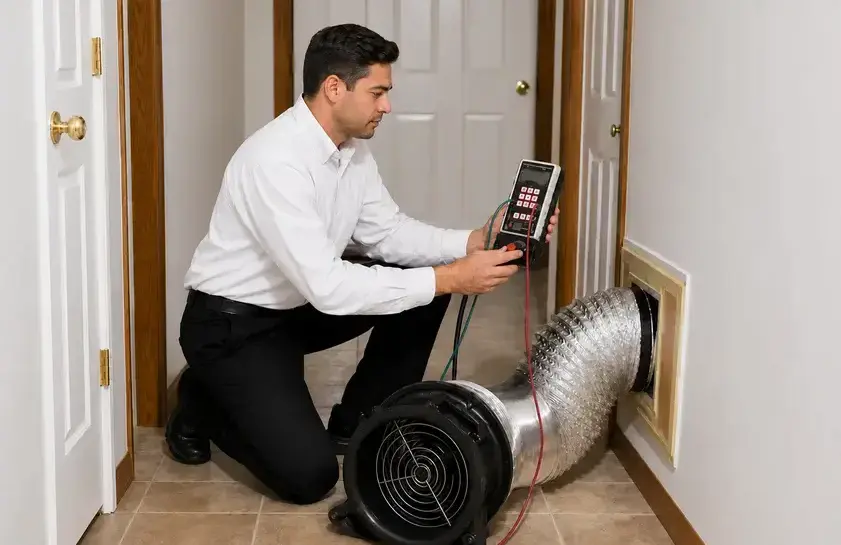
Do you need mold testing in Providence, RI?
Before paying for sampling it is worth knowing what a result can and cannot establish. EPA publishes an answer, quoted here as written.
Surface sampling may be useful to determine if an area has been adequately cleaned or remediated.EPA
Sampling for mold should be conducted by professionals who have specific experience in designing mold sampling protocols, sampling methods and interpreting results.EPA
That is the honest answer to when testing is worth paying for: to find what is hidden, and to verify a clean-up. What it cannot do is produce a pass or fail, because no federal threshold exists to measure a result against — which is why no one can tell you a safe spore count.
Currently, there are no EPA regulations or standards for airborne mold contaminants.EPA
In most cases, if visible mold growth is present, sampling is unnecessary.EPA
In Providence that question comes up often for a reason: Providence County has flood events on record in 25 separate years, and water that sat inside a wall does not announce itself.Source: NOAA Storm Events Database, Providence County (1996-2026; Flood, Flash Flood and Coastal Flood events)
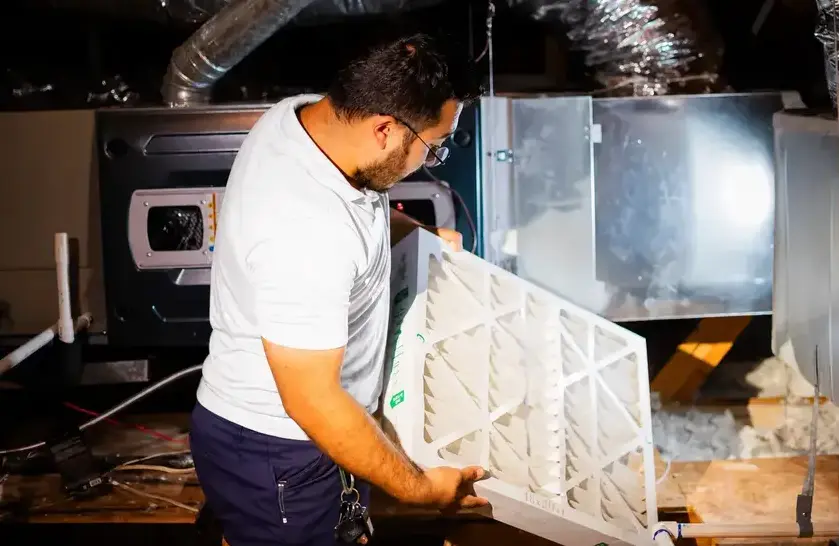
Indoor Air Quality Testing Matters in Providence
Providence's location near Narragansett Bay creates persistent humidity that affects homes and businesses year-round, keeping moisture levels elevated in enclosed spaces where air circulation may be limited. Many of the city's older homes—particularly in neighborhoods like College Hill and Federal Hill with their historic triple-deckers and colonial-era construction—have basements or crawl spaces that are naturally prone to dampness. When moisture accumulates in these spaces without proper ventilation, it creates an environment where mold can develop silently, often before visible signs appear. Indoor Air Quality Testing reveals what you cannot see: the presence of mold spores and moisture conditions that may already be affecting the air your family or customers breathe, even when the space looks clean on the surface.
Blevins Mold Remediation connects Providence property owners with local independent providers who specialize in comprehensive Indoor Air Quality Testing to identify mold presence, moisture sources, and ventilation issues before they escalate. These providers conduct thorough air sampling and environmental assessments, then clearly explain what the results mean for your specific property. Once testing is complete and any remediation work is underway or finished, follow-up testing confirms that air quality has genuinely improved and that moisture control measures are working as intended. This data-driven approach takes the guesswork out of whether your indoor environment is safe and healthy, giving you confidence and a clear path forward.
Why Providence Property Owners Trust Blevins for Air Quality
Fast Local Air Quality Answers
Indoor Air Quality Testing connects you with local providers who respond quickly to your concerns. Same-area technicians mean faster scheduling and results you can act on without delay.
Clear Communication Throughout Testing
Indoor Air Quality Testing works best when you understand every step. Local providers explain findings plainly, show you what the test reveals, and discuss next steps in straightforward terms.
Thorough Indoor Air Quality Testing
Indoor Air Quality Testing done right covers the full picture of your home's air. Local providers take systematic samples, identify moisture sources, and document conditions so you have a complete baseline.
Built for Providence's Moisture Challenges
Providence's persistent humidity keeps indoor moisture levels elevated year-round. Older homes in neighborhoods like Federal Hill and College Hill often face dampness in below-grade spaces. Indoor Air Quality Testing reveals moisture patterns unique to your home, guiding targeted solutions before mold takes hold.
How Our Indoor Air Quality Testing Process Works
Schedule Your Indoor Air Quality Testing Visit
Contact Blevins Mold Remediation to arrange an indoor air quality testing appointment with a local Providence provider. The inspector will discuss your concerns, moisture history, and any visible signs of mold or water damage affecting your home's air.
Conduct Comprehensive Indoor Air Quality Testing
The local provider performs air sampling and humidity measurements throughout your home to identify mold spores, moisture levels, and potential contamination sources. In Providence's humid climate, elevated moisture in basements and older construction often requires focused testing to assess air quality and remediation needs.
Receive Results and Remediation Recommendations
You'll receive a detailed indoor air quality testing report with findings and next steps for mold removal or moisture control. If remediation is needed, the local provider can discuss containment and removal options to restore your home's air quality.
Dealing with Indoor Air Quality Testing in Providence? Get fast, professional help.
Call Now — (401) 388-3550Indoor Air Quality Testing Across Providence
Providence's location near Narragansett Bay means the area experiences persistent humidity that extends well beyond seasonal rainfall, keeping moisture levels consistently elevated indoors year-round. This climate pattern is particularly relevant for Indoor Air Quality Testing, since elevated moisture creates conditions where mold and other air contaminants can develop and spread throughout a home or business. Properties throughout Providence—from historic neighborhoods like Federal Hill and College Hill to other established residential areas—often rely on enclosed basements or crawl spaces that are especially vulnerable to dampness accumulation when ventilation is inadequate, making air quality assessment a critical step in identifying hidden moisture sources and their impact on indoor conditions.
Because moisture can persist even during drier months, Indoor Air Quality Testing in Providence shouldn't be treated as a seasonal concern. Many older properties constructed decades ago may have building systems that weren't designed to manage year-round humidity effectively, which means air quality issues can develop gradually and go unnoticed until occupants experience symptoms or visible mold growth appears. A thorough indoor air quality evaluation helps identify where moisture is concentrating, how it's affecting the air you breathe, and what remediation steps independent local providers may recommend to restore safer conditions.
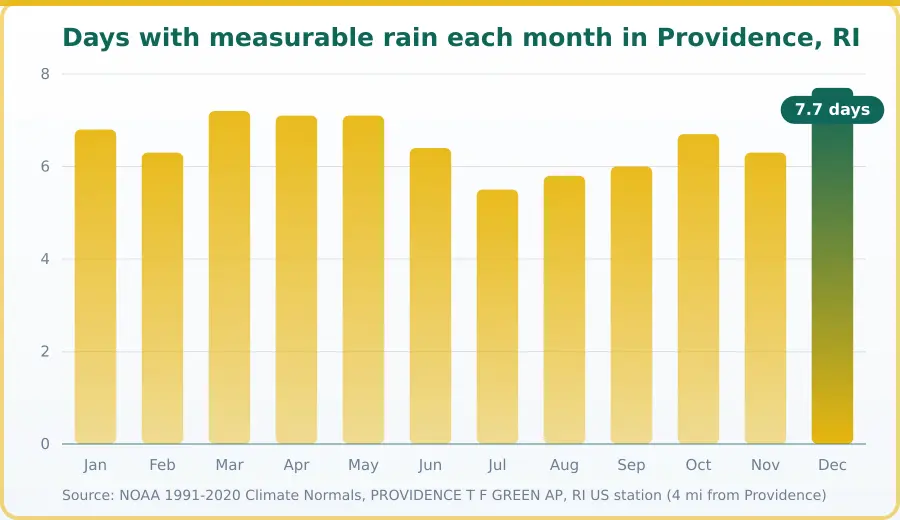
| Period | Days with measurable rain by month (days) |
|---|---|
| Jan | 6.8 |
| Feb | 6.3 |
| Mar | 7.2 |
| Apr | 7.1 |
| May | 7.1 |
| Jun | 6.4 |
| Jul | 5.5 |
| Aug | 5.8 |
| Sep | 6 |
| Oct | 6.7 |
| Nov | 6.3 |
| Dec | 7.7 |
Source: NOAA 1991-2020 Climate Normals, PROVIDENCE T F GREEN AP, RI US station (4 mi from Providence). Retrieved October 5, 2026.
Seasonal Indoor Air Quality Testing Needs in Providence
Spring: Awakening Moisture
Melting snow and spring rainfall increase indoor moisture as homes transition from winter heating. Indoor air quality testing reveals elevated humidity and mold spore levels that accumulated during closed-up winter months. Blevins connects Providence property owners with local providers who assess air quality and identify moisture sources before they worsen.
Summer: Trapped Humidity
High outdoor humidity persists indoors even with air conditioning, and condensation forms on cool surfaces. Indoor air quality testing measures whether moisture control and ventilation are adequate to prevent mold colonization in attics, wall cavities, and storage areas. Blevins helps homeowners understand summer air quality patterns and connect with remediation specialists who address the root cause.
Fall: Seasonal Transition Risk
Temperature swings between warm days and cool nights create condensation cycles that drive moisture deep into walls and foundations. Indoor air quality testing detects spore levels and moisture infiltration before winter closes homes for the season. Blevins coordinates inspections so Providence residents can remediate issues now rather than face contamination risk over months of sealed-up heating.
Winter: Basement & Crawlspace Challenge
Providence's older homes with basements and crawl spaces face persistent dampness year-round due to the region's elevated baseline humidity; winter's sealed-tight heating amplifies indoor moisture concentration. Indoor air quality testing identifies whether stagnant air and mold spores are accumulating in these enclosed spaces despite cold outdoor temperatures. Blevins connects property owners with local providers who test air quality and recommend ventilation and remediation to protect winter indoor environments.
Related Services
Indoor Air Quality Testing FAQs — Providence, RI
Indoor Air Quality Testing measures pollutants and contaminants in your home's air, including mold spores, moisture levels, and other airborne particles. The process involves air sampling at specific locations inside your property, followed by lab analysis to identify what's present and at what concentrations. Results help determine whether mold or excess humidity is affecting your indoor environment and guide next steps for remediation.
Blevins Mold Remediation connects you with independent local providers in Providence who typically respond to testing requests within days. Once you contact us, we match you with available providers in your area who can arrange a convenient appointment time. Response speed depends on current demand and provider availability, but local connections mean minimal travel time and faster scheduling than services from outside the region.
Pricing for Indoor Air Quality Testing varies based on the scope of testing, number of locations sampled, type of analysis required, and the size of your property. Labs may charge differently for standard spore counts versus extended panels. The independent providers you're connected with will provide pricing details upfront. Blevins does not set provider fees—each local provider determines their own rates based on the specific testing work your property needs.
Before Indoor Air Quality Testing, close doors and windows for a set period (your provider will specify) to let indoor air stabilize naturally—this gives accurate results. Avoid running HVAC systems, fans, or opening windows immediately before testing unless your provider advises otherwise. Inform the provider about any recent water damage, visible mold, or persistent odors. Clear test areas of clutter so the technician can access multiple rooms and place sampling equipment safely.
Maintain good ventilation by using exhaust fans in kitchens and bathrooms, and ensure they vent outside. Control humidity by using a dehumidifier if needed and addressing any water intrusion promptly. In older Providence homes, proper basement or crawl space ventilation is especially important, as these areas naturally retain moisture. Regular monitoring and prompt repair of leaks prevent conditions that lead to elevated indoor moisture and future air quality issues.
Providence's year-round humidity levels mean moisture concerns persist throughout all seasons, making Indoor Air Quality Testing relevant whenever you suspect mold or air quality problems. Winter can trap moisture inside homes with poor ventilation, while warmer months may accelerate mold growth if dampness already exists. If you notice musty odors, visible mold, or health symptoms, testing is warranted regardless of season. Annual testing may benefit homes with known moisture vulnerabilities.
Homeowner Safety Toolkit
Verify Your Providence, RI Mold Remediation Company
Before you hire anyone, use these independent national resources to confirm credentials, standards, and track record.
BBB
Look up any mold remediation company's complaint history, customer reviews, and accreditation status — a free, independent check before you hire.
Check StandingCDC
Covers the health effects of mold exposure and safe cleanup practices, separate from the remediation work itself — useful if anyone in the home has respiratory symptoms.
Mold Health GuideIICRC
Publishes the S520 standard for professional mold remediation. Confirm a company's technicians hold real, current IICRC certification before you hire them.
Verify CertificationDealing with Indoor Air Quality Testing in Providence, RI? Call (401) 388-3550 for 24/7 help.
Call Now — (401) 388-3550Areas We Serve in Providence, Rhode Island
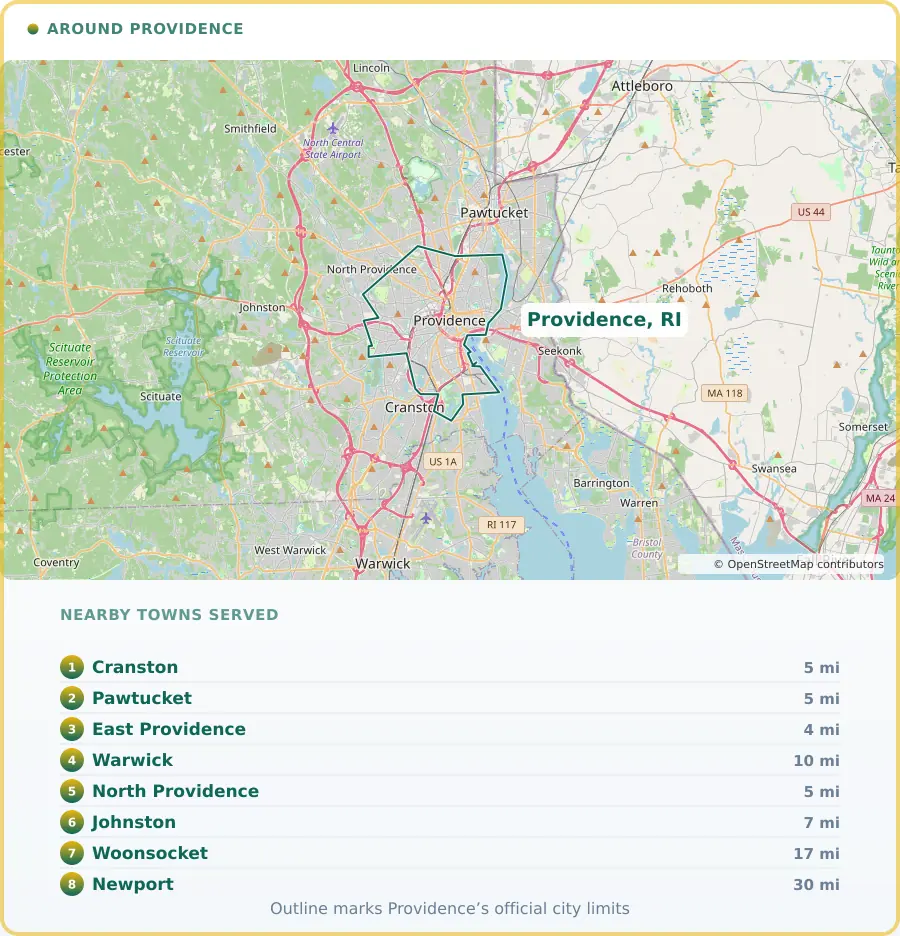
Based in Providence, RI, with 8 nearby communities inside the service area — near enough to reach quickly, not just listed on a map.
Providence, RI Information
Providence anchors Rhode Island as its capital and economic heart, a compact city of roughly 190,000 people where brick mill buildings sit close to modern research labs. Brown University and Johnson & Wales help fuel a steady pulse of students and scholars, while hospital systems like Lifespan and Care New England make healthcare one of the city's biggest engines alongside higher education.
The local economy runs on variety: Citizens Financial Group and Bank of America represent a solid financial sector, Textron keeps manufacturing in the mix, and a revived downtown has brought hospitality, arts, and small businesses back to life. Wander from the historic lanes of College Hill to the lively streets of Federal Hill, and you'll feel a city that blends old New England character with genuine forward motion.
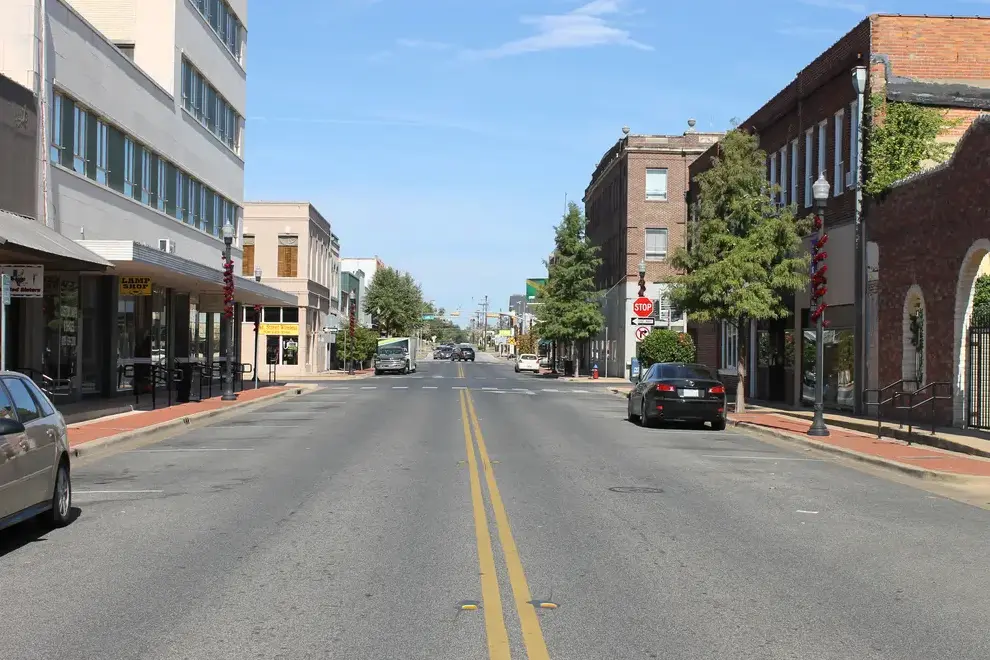
Photo: Billy Hathorn, CC BY-SA 3.0